In the intricate world of precision engineering, the ball groove bearing serves as a cornerstone for motion control, providing the essential balance between low friction and high structural integrity. These components are not merely mechanical parts but are the silent enablers of efficiency in everything from household appliances to aerospace turbines, ensuring that rotational energy is preserved and wear is minimized.
Understanding the nuances of these bearings is critical for engineers and procurement specialists globally, as the selection of a high-performance groove design can directly impact the lifespan of industrial machinery. By reducing heat generation and vibrational noise, the right bearing configuration enhances the overall reliability of a system, leading to lower maintenance costs and increased operational uptime.
As global industries push toward higher speeds and tighter tolerances, the evolution of the ball groove bearing has become a focal point of mechanical innovation. Whether integrated into a miniature medical device or a heavy-duty industrial conveyor, these bearings are fundamental to the pursuit of sustainable, high-efficiency mechanical movement.
Global Relevance of Ball Groove Bearing Technology
On a global scale, the demand for high-precision ball groove bearing units is driven by the rapid expansion of automation and electric mobility. According to ISO standards for rolling bearings, the ability to maintain tight tolerances while operating at high RPMs is non-negotiable for modern manufacturing. As emerging economies industrialize, the reliance on standardized, interchangeable bearing components has allowed for the rapid scaling of production lines across Asia and Europe.
However, the industry faces a persistent challenge: the trade-off between initial cost and operational longevity. Many enterprises struggle with premature bearing failure due to improper lubricant selection or misalignment, which leads to significant downtime. Addressing these challenges requires a deeper understanding of how groove geometry affects load distribution and heat dissipation in diverse environmental conditions.
Defining the Mechanics of Ball Groove Bearings
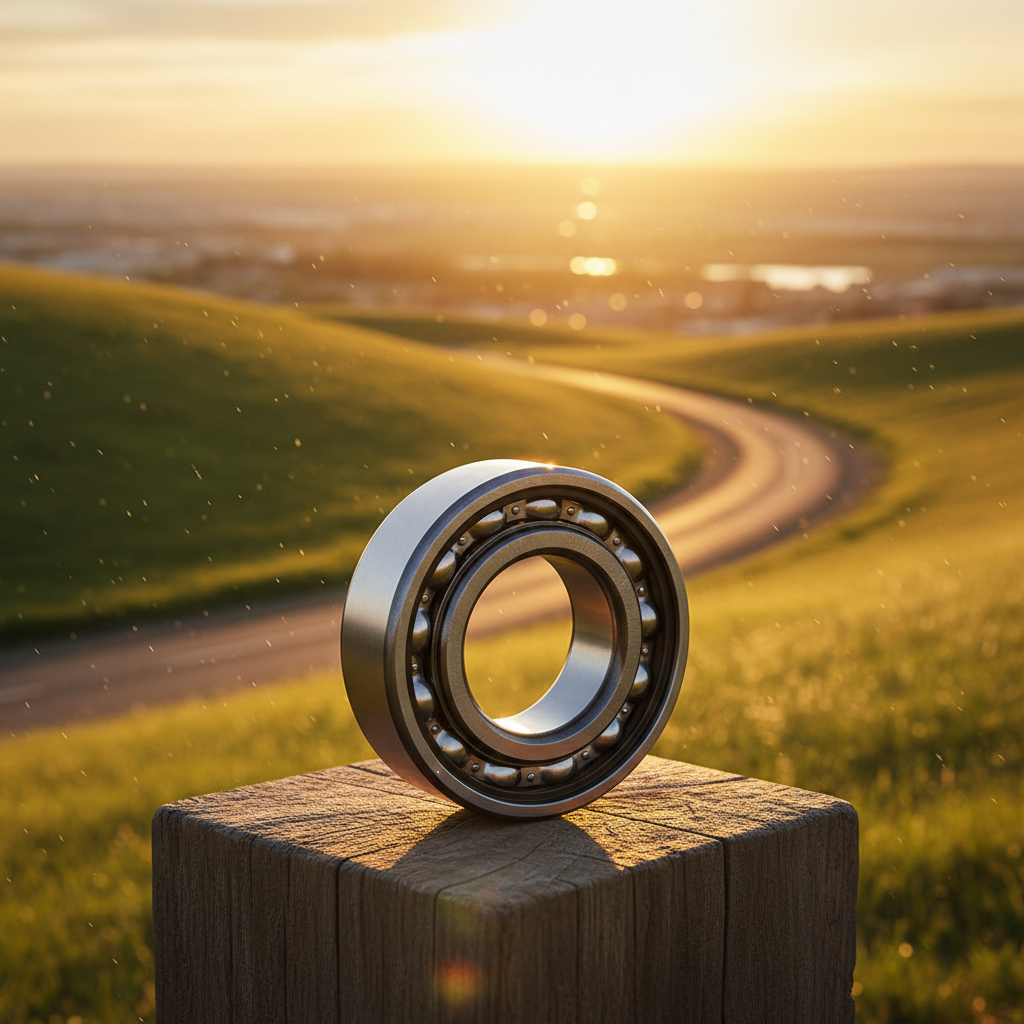
At its most basic level, a ball groove bearing consists of an inner ring, an outer ring, a set of rolling balls, and a cage that maintains the spacing between the balls. The "groove" refers to the precision-machined raceway that guides the balls, ensuring they remain in contact with the rings while minimizing rolling resistance. This simple yet elegant design allows the bearing to support both radial loads and a limited amount of axial load.
In the context of modern industry, these bearings are the primary solution for reducing friction in rotating shafts. By replacing sliding contact with rolling contact, they drastically reduce the energy required to keep a machine in motion. This is not just a matter of mechanical efficiency but a humanitarian and environmental necessity, as reducing energy waste on a global industrial scale contributes significantly to lowering carbon emissions.
Whether they are Deep Groove Ball Bearings designed for versatility or specialized Miniature Bearings for precision instruments, the core principle remains the same: providing a smooth, predictable path for rotational movement. The synergy between the hardness of the steel and the precision of the groove is what allows modern machinery to operate with surgical accuracy.
Key Factors for Bearing Performance and Durability
The longevity of a ball groove bearing is primarily determined by its material composition and surface finish. High-chrome steel is the industry standard for its hardness and wear resistance, but the real magic happens in the heat treatment process, which ensures the raceways can withstand millions of cycles without pitting or spalling.
Load capacity and scalability are also critical. A well-engineered ball groove bearing must be able to handle specified radial forces without distorting the groove geometry. Scalability ensures that the same design principles can be applied to a bearing the size of a marble or one the size of a car wheel, maintaining consistent performance metrics across different scales.
Finally, cost efficiency is achieved through a balance of precision and mass production. By utilizing advanced CNC grinding and automated quality inspection, manufacturers can produce bearings that meet stringent tolerances while remaining affordable for global markets. This ensures that high-quality motion control is accessible to both small-scale workshops and giant industrial conglomerates.
Comparative Efficiency of Groove Bearing Configurations
Different configurations of the ball groove bearing offer varying levels of performance based on the application. For instance, a deep groove design provides superior radial load support, whereas a shallower groove may be preferred for applications requiring higher speeds and lower friction. Selecting the correct profile is essential for optimizing the energy efficiency of the entire drivetrain.
To better understand the performance metrics, it is helpful to compare various bearing methods across key KPIs such as friction reduction, load capacity, and noise levels. The following data illustrates how different specialized versions of the ball groove architecture perform under standardized industrial testing.
Performance Metrics for Ball Groove Bearing Variants
Global Industrial Applications and Use Cases
The application of the ball groove bearing spans nearly every modern industry. In the automotive sector, they are vital for alternators, starters, and transmission systems, where they must endure extreme temperature fluctuations and high vibrational stress. In the medical field, miniature versions are used in dental drills and surgical robotics, where absolute precision and sterility are the primary requirements.
Beyond traditional factories, these bearings are deployed in remote industrial zones, such as wind turbine hubs in the North Sea or mining equipment in the Australian Outback. In these harsh environments, the bearing's ability to resist contamination via specialized sealing—converting a standard groove bearing into a shielded unit—is what prevents catastrophic equipment failure and ensures the safety of technicians on site.
Long-Term Value and Sustainability Benefits
Investing in a premium ball groove bearing provides tangible long-term value by extending the Mean Time Between Failures (MTBF). From a logical perspective, the reduction in friction translates directly to lower electricity consumption, which is a critical KPI for companies aiming for carbon neutrality. From an emotional perspective, the reliability of these components builds trust between the manufacturer and the end-user, knowing that the machine will not fail during a critical operation.
Sustainability is also addressed through the lifecycle of the bearing. Modern manufacturing processes now focus on the recyclability of the bearing steel and the use of biodegradable lubricants. By optimizing the groove geometry to reduce wear, we reduce the frequency of replacement, thereby minimizing the amount of industrial waste sent to landfills.
Ultimately, the value of a high-quality bearing is found in its invisibility. When a ball groove bearing performs its job perfectly, the operator doesn't notice it—there is no noise, no vibration, and no heat. This seamless operation is the pinnacle of engineering success, providing dignity to the work process through stable and predictable technology.
Future Trends and Material Innovations
The future of the ball groove bearing is being shaped by the digital transformation of industry, often referred to as Industry 4.0. We are seeing the rise of "Smart Bearings," where sensors are integrated into the outer ring to monitor vibration and temperature in real-time. This allows for predictive maintenance, where a bearing is replaced based on actual wear data rather than a generic schedule.
Material science is also evolving rapidly. We are moving beyond traditional steel to incorporate ceramics (Silicon Nitride) and advanced polymers for specific environments. Ceramic balls in a steel groove can operate at much higher speeds and require less lubrication, making them ideal for high-speed spindles and vacuum environments where traditional oils would evaporate.
As we transition toward green energy, these bearings will play a pivotal role in the efficiency of electric vehicle (EV) drivetrains and hydrogen compressors. The focus is shifting toward "ultra-low friction" designs that can squeeze every single watt of energy out of a battery, ensuring that the next generation of transport is as efficient as possible.
Comparison of Ball Groove Bearing Material Technologies
| Material Type |
Friction Level |
Max Temp (°C) |
Durability Score |
| Chrome Steel |
Medium |
120 |
8/10 |
| Stainless Steel |
Medium |
150 |
7/10 |
| Ceramic (Si3N4) |
Very Low |
800 |
10/10 |
| Hybrid Ceramic |
Low |
300 |
9/10 |
| Engineering Plastic |
Low |
80 |
5/10 |
| Teflon Coated |
Very Low |
100 |
6/10 |
FAQS
The primary difference lies in the contact point. A ball groove bearing uses spherical balls that make point contact with the raceway, resulting in lower friction and higher speeds. In contrast, roller bearings use cylinders that make line contact, allowing them to support much heavier radial loads but at the cost of higher friction and lower maximum RPMs.
Common warning signs include an increase in operating temperature, audible grinding or clicking noises, and increased vibration in the machinery. If you notice a decrease in rotational speed or an increase in energy consumption for the same load, it is likely that the raceways of the bearing have worn down and replacement is necessary.
While some specialized ceramic or plastic bearings are designed for dry operation, standard steel ball groove bearings require lubrication to prevent metal-on-metal contact. Without a lubricant film, friction increases rapidly, leading to overheating and "seizing," where the balls weld themselves to the raceway, causing immediate machine failure.
The shield (usually made of metal or rubber) serves two main purposes: it prevents external contaminants like dust, water, and debris from entering the raceway, and it keeps the internal lubricant from leaking out. This significantly extends the life of the bearing in dirty or humid industrial environments.
In high-speed applications, even a micron-level deviation in the groove's circularity can cause significant centrifugal imbalance. Precision grade bearings are manufactured with tighter tolerances, ensuring that the balls are perfectly centered and the movement is smooth, which prevents overheating and catastrophic failure at high RPMs.
The most effective ways to prevent failure are ensuring proper alignment during installation, using the correct grade of lubricant for the operating temperature, and avoiding overloading the bearing beyond its rated capacity. Regular monitoring of vibration and temperature can also help catch early signs of wear.
Conclusion
In summary, the ball groove bearing remains an indispensable element of global mechanical infrastructure. From its fundamental role in reducing friction to its integration into the latest smart-industry technologies, it balances the demanding needs of load capacity, speed, and durability. By selecting the right material and configuration—whether it be a precision-grade steel unit or a high-temp ceramic hybrid—industries can ensure their operations are both efficient and sustainable.
Looking forward, the synergy between material science and digital monitoring will continue to redefine what these components can achieve. We encourage engineers and procurement managers to look beyond the initial purchase price and consider the total lifecycle value of their bearing choices. Investing in quality today means fewer failures, lower energy costs, and a more reliable industrial future. Visit our website for more technical insights and product selection: www.hebeibearings.com