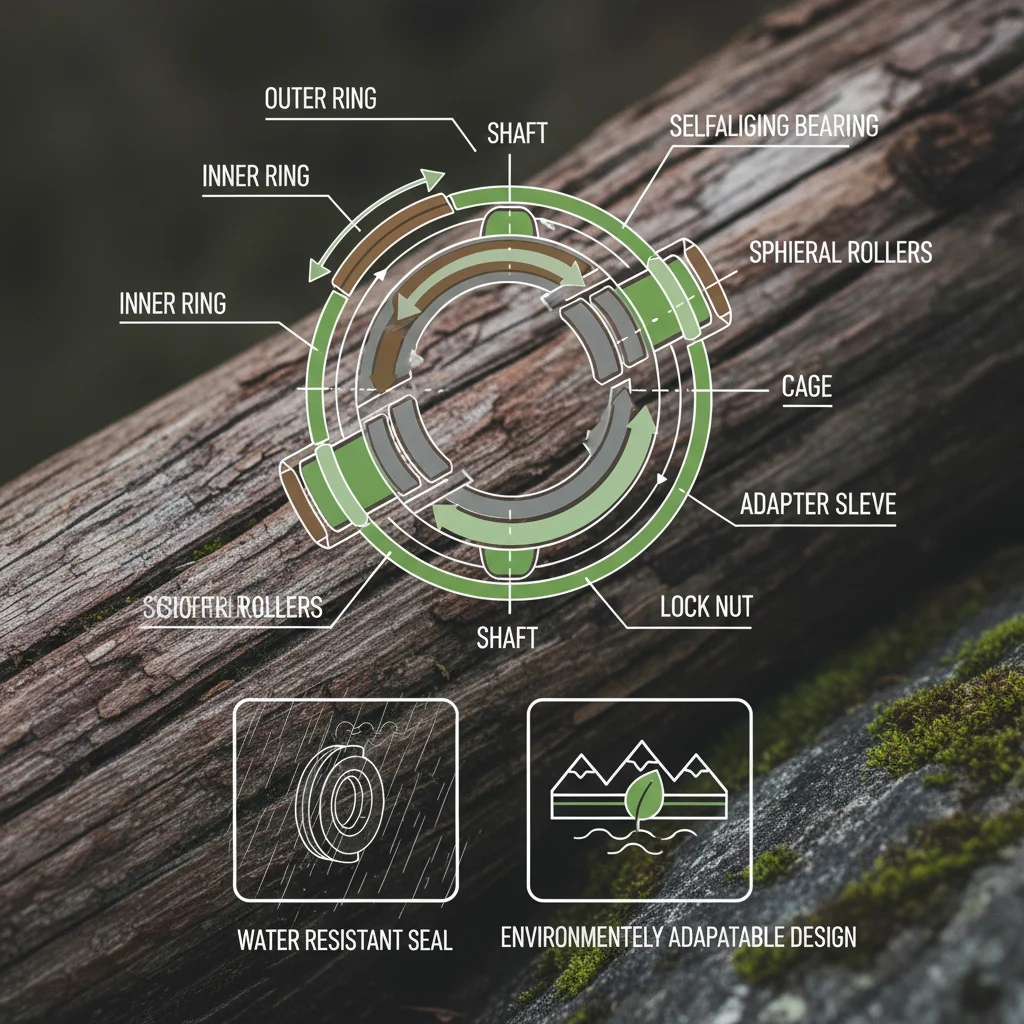
In the precision-driven world of industrial motion, the self aligning linear ball bearing stands as a critical innovation for engineers facing misalignment challenges. Unlike standard linear bearings, these components are engineered to compensate for angular deviations between the shaft and the housing, ensuring smooth travel even when the system isn't perfectly straight. This capability significantly reduces friction and prevents premature wear, making them indispensable in high-performance machinery across the globe.
From an industrial perspective, the global demand for such specialized bearing systems is surging as automation and robotics become the standard in manufacturing. The ability of a self aligning linear ball bearing to absorb structural irregularities means less downtime for calibration and a longer operational lifespan for the entire assembly. This reliability is not just a technical advantage but a commercial necessity for companies operating in competitive global markets.
Understanding the mechanics and application of these bearings allows businesses to optimize their equipment's efficiency and reduce maintenance costs. Whether integrated into heavy-duty industrial presses or delicate medical devices, the self-aligning feature ensures that radial loads are distributed evenly, preventing the "binding" effect common in traditional linear guides. By exploring the nuances of this technology, manufacturers can achieve a higher tier of operational precision and sustainability.

The Mechanics of Self Aligning Linear Ball Bearing Design
The fundamental principle behind a self aligning linear ball bearing is its ability to pivot slightly during linear travel. While a standard linear bearing requires a perfectly parallel relationship between the rail and the load, the self-aligning variant utilizes a spherical outer race or a flexible housing mechanism. This allows the bearing to "float" and adjust to the actual path of the shaft, effectively neutralizing the parasitic forces that typically arise from minor installation errors.
This design is particularly crucial in large-scale machinery where thermal expansion or structural sagging can cause misalignment over time. By incorporating this inherent flexibility, the self aligning linear ball bearing maintains a constant contact area between the balls and the raceway, reducing localized stress concentrations. The result is a smoother glide, lower noise levels, and a drastic reduction in the frequency of bearing failures caused by edge-loading.
Global Industrial Relevance and Market Demand
On a global scale, the demand for precision motion components is tied directly to the rise of Industry 4.0. According to ISO standards for rolling bearings, the ability to maintain tolerance under varying loads is a key indicator of machine reliability. The self aligning linear ball bearing addresses a primary pain point in global manufacturing: the high cost of ultra-precise installation. By allowing for a degree of angular misalignment, these bearings reduce the need for expensive, time-consuming laser alignment processes during factory setup.
In emerging industrial hubs across Southeast Asia and Latin America, where rapid scaling of production lines is common, the flexibility provided by these bearings is invaluable. They allow for the quick deployment of machinery in environments where the foundation might not be perfectly level. This adaptability ensures that productivity isn't throttled by the physical limitations of the facility, enabling companies to maintain high throughput without sacrificing the longevity of their equipment.
Furthermore, the shift toward sustainable manufacturing requires components that last longer and require less lubricant. The self aligning linear ball bearing naturally reduces wear and tear, meaning fewer replacements and less industrial waste. As global environmental regulations tighten, the move toward "maintenance-free" or "long-life" components becomes a strategic priority for Fortune 500 companies aiming for carbon neutrality and operational efficiency.
Core Components and Engineering Factors
The efficiency of a self aligning linear ball bearing depends on several critical engineering factors, primarily the quality of the chrome steel or stainless steel used in the raceways. The hardness of the material determines the bearing's capacity to handle heavy radial loads without deformation, while the precision of the ball grinding ensures minimal rolling resistance.
A key differentiator is the "alignment angle" capacity of the self aligning linear ball bearing. This angle defines the maximum degree of tilt the bearing can accommodate before it begins to bind. Engineering this balance requires precise calculations of the spherical curvature of the outer ring, ensuring that the balls maintain full contact with the raceway regardless of the tilt angle.
Durability is further enhanced through advanced sealing technologies and lubrication systems. Whether using synthetic grease or oil-bath lubrication, the goal is to protect the internal balls of the self aligning linear ball bearing from contaminants. In harsh environments—such as textile mills or chemical plants—these seals prevent abrasive dust from entering the race, which would otherwise nullify the benefits of the self-aligning feature.
Performance Metrics and Comparative Efficiency
When comparing the self aligning linear ball bearing to standard linear bushings or rigid bearings, the most striking metric is the "life-cycle extension." Standard bearings often fail prematurely when a shaft bends by even a fraction of a degree. In contrast, the self-aligning design redistributes the load, maintaining a consistent load-bearing profile that extends the mean time between failures (MTBF) significantly.
Moreover, the energy efficiency of these systems is superior. By eliminating the friction caused by misalignment, the motor driving the linear motion consumes less power. This leads to a reduction in heat generation, which in turn protects the lubrication film and prevents thermal expansion from further complicating the alignment of the self aligning linear ball bearing.
Performance Analysis of Self Aligning Linear Ball Bearing Variations
Global Applications and Real-World Use Cases
The versatility of the self aligning linear ball bearing makes it a staple in diverse industries. In the automotive assembly sector, for instance, robotic arms often experience slight structural shifts due to high-speed movements. By integrating these bearings, manufacturers ensure that the linear slides remain fluid, preventing the robotic arm from "stuttering" or experiencing jerky motions that could compromise the quality of the vehicle paint or weld.
In more challenging environments, such as mining operations in remote regions of Australia or Canada, the self aligning linear ball bearing is used in heavy-duty sorting equipment. These machines are often subject to intense vibrations and chassis warping. The self-aligning capability allows the equipment to continue functioning despite the harsh conditions, reducing the need for specialized technicians to travel to remote sites for frequent realignment.
Long-Term Value and Sustainable Advantages
Investing in a self aligning linear ball bearing provides tangible long-term value by shifting the maintenance paradigm from reactive to proactive. Instead of waiting for a bearing to seize due to misalignment, the inherent flexibility of the system absorbs the error. This ensures a higher degree of safety for operators, as unexpected mechanical failures in heavy machinery can lead to dangerous system collapses.
From a financial perspective, the initial higher cost of a self-aligning unit is quickly offset by the reduction in "Total Cost of Ownership" (TCO). Fewer replacement parts, reduced labor costs for alignment, and minimized production downtime create a compelling ROI. The logical choice for any forward-thinking plant manager is to prioritize components that offer this level of reliability.
Sustainability is the final piece of the value proposition. Because a self aligning linear ball bearing operates with less friction, it minimizes energy waste. Furthermore, the extended life of the component means fewer steel resources are consumed over the machine's lifespan, aligning industrial goals with global ESG (Environmental, Social, and Governance) standards.
Future Trends and Technological Innovations
The future of the self aligning linear ball bearing lies in the integration of "smart" materials and IoT monitoring. We are seeing the emergence of bearings with embedded sensors that can monitor the actual alignment angle in real-time. This data allows maintenance teams to see exactly when a machine's structure has shifted beyond the bearing's compensation limit, triggering a precision alert before failure occurs.
Material science is also evolving, with the introduction of ceramic-hybrid balls within the self aligning linear ball bearing. Ceramic balls are lighter, harder, and more resistant to corrosion than steel, allowing these bearings to operate at higher speeds and in more aggressive chemical environments. This is particularly promising for the semiconductor and pharmaceutical industries, where cleanliness and extreme precision are paramount.
Additionally, the trend toward additive manufacturing (3D printing) is allowing for the creation of customized housing for self aligning linear ball bearing systems. This means bearings can be tailored to the specific geometric constraints of a unique machine, further optimizing the alignment capabilities and reducing the overall footprint of the motion system.
Comparison of Self Aligning Linear Ball Bearing Technical Specifications
| Bearing Material |
Alignment Capacity |
Load Rating |
Expected Lifespan |
| Chrome Steel |
Moderate (2-3°) |
High |
Standard |
| Stainless Steel |
Moderate (2-3°) |
Medium |
High (Corrosion Resistant) |
| Ceramic Hybrid |
High (3-5°) |
Very High |
Extended |
| Plastic/Polymer |
Very High (5°+) |
Low |
Medium |
| Coated Alloy |
Moderate (2°) |
High |
High |
| Teflon-Lined |
High (4°) |
Medium |
Medium |
FAQS
A self aligning linear ball bearing is a specialized linear motion component designed to compensate for angular misalignment between the shaft and the bearing housing. Unlike rigid bearings, it can pivot slightly to accommodate a tilted shaft, which prevents binding and reduces wear on the raceways during linear travel.
Depending on the design and material, most self aligning linear ball bearings can handle between 2 and 5 degrees of angular deviation. High-precision steel models typically sit at the lower end, while hybrid or polymer-based systems can often accommodate larger angles of misalignment.
Yes, in many cases, but you must verify the dimensional compatibility. While the shaft size remains the same, the outer diameter or the housing requirements for a self aligning linear ball bearing may differ. The transition usually results in smoother operation and longer part life.
Actually, they are often cheaper to maintain. Because they absorb misalignment, they reduce the frequency of premature failures and the need for constant precision re-alignment of the machinery. Standard lubrication schedules apply, but the overall maintenance interval is typically extended.
Industries involving heavy machinery, automation, and robotics benefit most. This includes automotive assembly, mining, agriculture, and medical device manufacturing, where structural shifts or environmental vibrations can cause misalignment over time.
Choose chrome steel for high-load industrial use, stainless steel for food or pharmaceutical environments, and ceramic hybrids for high-speed or corrosive applications. The choice depends on your specific load requirements, environmental exposure, and desired lifespan.
Conclusion
The self aligning linear ball bearing represents a critical intersection of mechanical ingenuity and practical industrial need. By solving the pervasive problem of misalignment, these components not only enhance the precision and efficiency of linear motion but also significantly extend the operational life of machinery. From reducing energy consumption to minimizing costly downtime, the integration of self-aligning technology is a strategic move for any manufacturer aiming for excellence in production and sustainability.
Looking forward, the evolution of smart materials and IoT integration will only further enhance the capabilities of these bearings, turning a passive mechanical component into an active data source for predictive maintenance. For businesses seeking to optimize their hardware and ensure long-term reliability, upgrading to high-quality self-aligning solutions is an essential step. Explore our full range of precision components and find the perfect fit for your system by visiting our website: www.hebeibearings.com.